
- TOP
- Company information
- KIMOTO's Initiatives Toward a Sustainable Future
KIMOTO's Initiatives Toward a Sustainable Future

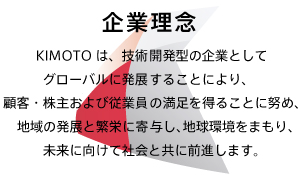
Corporate philosophy and long-lasting management
Since its founding, KIMOTO has practiced management based on the philosophy of "valuing people," fostering a caring environment where employees treat each other like family, implementing fair evaluations regardless of nationality, educational background, gender, or age, and maintaining people-centered management. These long-standing efforts naturally align with the concept of the SDGs (Sustainable Development Goals) adopted by the United Nations in 2015.
For KIMOTO, the SDGs are not a new initiative but a framework to systematize our existing corporate activities and advance them with clearer objectives.
The three initiatives KIMOTO focuses on: "Things," "Experiences," and "Heart."
We believe that achieving a better society requires not only manufacturing and selling products but also focusing on these three key elements.
"Things": Providing products, services, and information with high quality and reliability.
"Experiences": Providing experiences imbued with consideration for the user and others.
"Heart": Heartfelt initiatives that allow people to sense a story.
For example, we strive for meticulous consideration from the customer's perspective, such as developing products that not only meet requirements but also consider ease of use, ensuring easy unpacking, clear product name displays, and thoughtful label placement. We value person-to-person communication and aim for a management style where each employee passionately engages in social contribution.
The Challenge of Becoming a Company That Continues for 100 Years
To become a company that continues for 100 years, which KIMOTO aims for, management that considers society and the environment is essential. Through various initiatives connected to SDGs, such as rice cultivation and dahlia cultivation at KIMOTO Farm, and work style reforms, we aim for more people to become KIMOTO fans.
We firmly believe that management that continues to be loved for a long time is the path toward becoming a company that continues for 100 years.
KIMOTO's SDGs Initiative Achievements
ーSocial contribution that began from the founder's aspirationsー
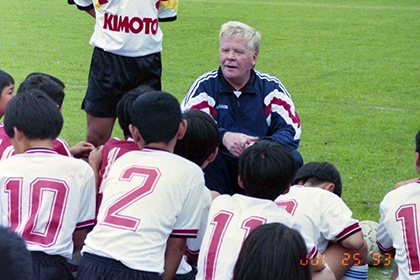
KIMOTO has undertaken various initiatives from the spirit of 'valuing people'. To commemorate the 30th anniversary of its founding, in 1989, West Germany (at the time) invited a former professional soccer player for 'Soccer Communication'. This is to coach Japanese soccer youths , with the purpose of Japan-Germany friendship and local exchange, and the founding president's hope that it would serve as an opportunity for the youths to dream of going abroad Ta.
The founding president's wishes are carried on to the present, aiming for a company that continues for 100 years , and has been working on workflow reforms since 2009. Eliminating waste and working efficiently through many reforms such as abolishing company cars, flexible working without core hours, working from home, and job sharing have been challenged. Also, prospering together with the local community This approach has been part of KIMOTO’s philosophy since its inception, as evidenced by our practices such as rice cultivation on rented farmland, wild yam production, and dahlia cultivation. Every continuous effort we undertake is connected to the SDGs.
A promise for the future
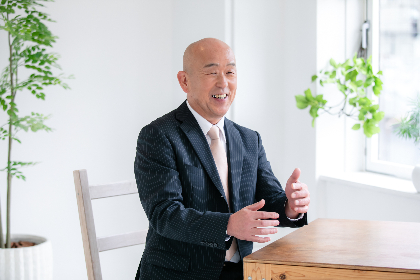
KIMOTO will continue to pursue "product creation that benefits society" as a technology development-oriented company, and we will proceed with management that considers society and the environment at its core. We believe that our mission is to continue being a valuable entity for all the people who support and are involved with KIMOTO, and for the global environment.

This year marks the 76th anniversary of KIMOTO's founding.
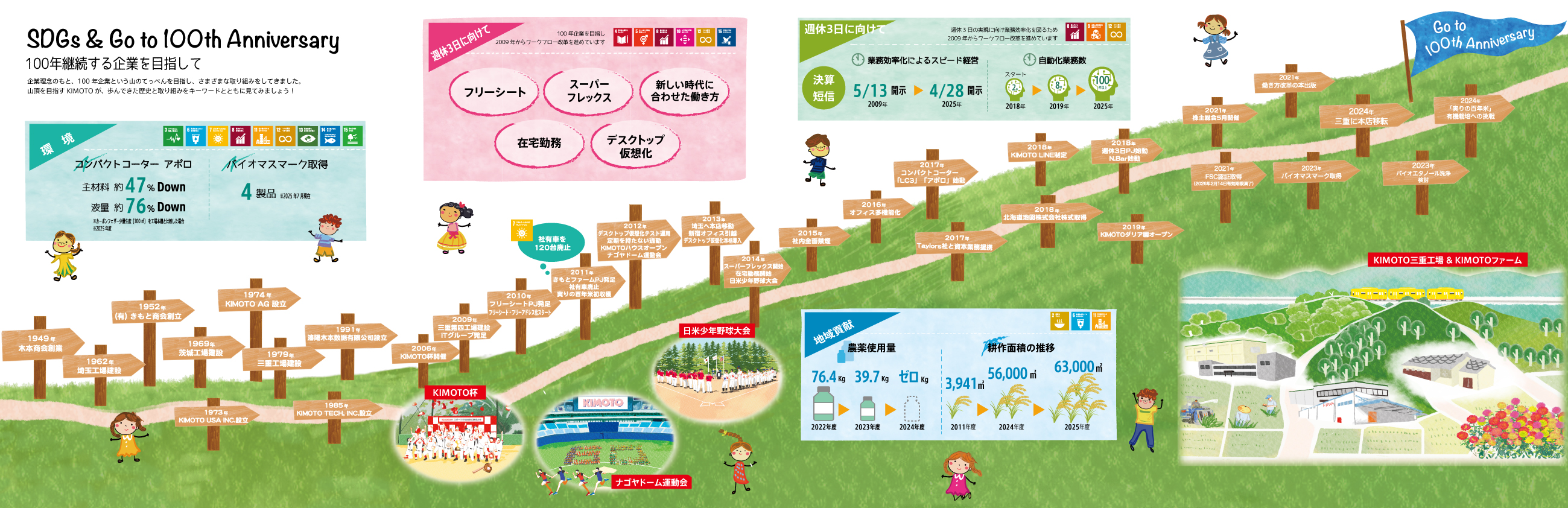
Under the corporate philosophy, we have aimed for the top of the mountain as a 100-year company and undertaken various initiatives.
Let's take a look at the history and efforts of KIMOTO, aiming for the summit, along with keywords!
↓ Clicking on the image will enlarge it (opens in a new window).

Environmental
Liquid volume approx. 76% Down
*FY2025

By "visualizing" CO₂ emissions, we can take more certain steps toward reduction.
In 2024, KIMOTO introduced a system to calculate and visualize greenhouse gas (GHG) emissions associated with its business activities to further advance its environmental initiatives.
By "visualizing" emissions, we can accurately understand our current CO₂ emissions, verify the effectiveness of reduction efforts, and swiftly plan and implement improvement measures.
Moving forward, KIMOTO will continue to promote business operations centered on environmental management, steadily advancing toward further reduction of environmental impact and achieving carbon neutrality with the entire supply chain in view.
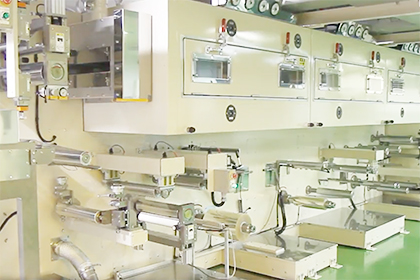
"Apollo," the Symbol of Sustainable Manufacturing: A Small-Lot, Multi-Variety, High-Efficiency Coater
The COMPACT COATER "Apollo" was born as a prototype at the Saitama R&D Center in 2012 and began full-scale operation in 2017. While meeting the needs of small-lot, multi-variety production, the equipment was improved in 2018, evolving into a line capable of manufacturing high-quality products.
By 2020, production volume had expanded approximately tenfold compared to the initial operation start in 2017. Through improvements in yield and waste reduction, a lean manufacturing system was established, reducing the usage of main materials by about 47% and liquid usage by about 76%.
In 2023, the operation was relocated to the Ibaraki Plant to pursue further efficiency. We will continue to maintain a flexible production system while achieving environmentally conscious and sustainable manufacturing.
COMPACT COATERAbout Apollo Here

Towards a three-day weekend
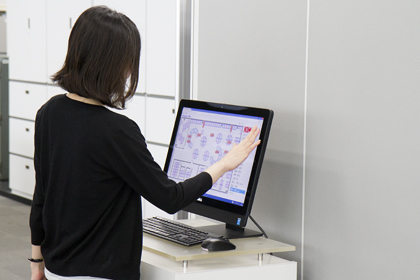
Aiming for Sustainable Work Styles: KIMOTO's Workflow Reforms
Aiming to become a 100-year company, KIMOTO has been working since 2009 to create systems that allow each employee to work flexibly. The numerous workflow reforms implemented to date are not merely about improving operational efficiency; they represent a challenge to achieve sustainable ways of working.
A Work Style Not Dependent on Cars: Abolishing Company-Owned Vehicles
In 2011, KIMOTO abolished all 120 company-owned vehicles, including sales cars. Travel requiring a car was shifted to a style utilizing rental cars and car-sharing services. This has reduced the risks associated with driving and cut costs such as fuel and maintenance expenses by approximately one-third. It has also significantly reduced the resources required to maintain company vehicles and CO₂ emissions, realizing a work style that minimizes environmental impact.
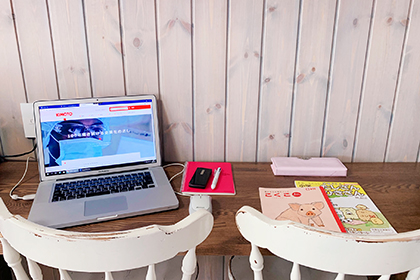
Achieving a Location-Independent Work Style: Office-less + Virtual Desktop
KIMOTO has been progressively promoting an office-less approach since 2009. Influenced by the COVID-19 pandemic in 2020, the company decided to close its satellite offices in Nagoya, Osaka, Sapporo, and Fukuoka, as well as its main office in Shinjuku. Currently, with the introduction of a virtual desktop environment, employees can access their work environment from anywhere, using any device, as long as they have an internet connection. Approximately 80% of eligible employees perform their duties via remote work, realizing an environment where anyone can work flexibly at any time, regardless of reason, duration, frequency, or location. This innovative work style makes it easier to balance work with life events such as childcare and nursing care, advancing the creation of a sustainable workplace where employees can work with peace of mind for the long term.
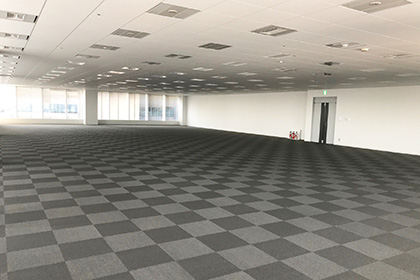
Freedom of Time with Super Flex
KIMOTO has introduced a "Super Flex" system with no core working hours. As long as the designated total working hours are met, employees are free to choose their start and end times. This allows each employee to manage their time autonomously and build their own distinctive work style.
Transforming the Organization: Evolution into a "Decentralized Autonomous" Structure
In 2021, KIMOTO transitioned from its traditional siloed organizational structure to a "decentralized autonomous organization" that is resilient to change and capable of flexible adaptation.
As a mechanism to encourage the growth of each employee and maximize their potential, we have introduced a system that allows them to experience multiple departments. Currently, approximately 51% of our employees, in addition to their duties in their assigned departments, allocate 49% of their time to concurrent roles, thereby realizing a way of working that transcends traditional boundaries.
This framework has been built through the accumulation of initiatives we have continued since 2009, such as mission changes, concurrent roles, and multi-functionalization.
The diverse experiences of each individual employee form the very foundation that supports KIMOTO's sustainable organizational management.
2009 2025

Automate and optimize your business
Starting with administrative departments such as HR and accounting, we automated operations and expanded our back-office digital transformation initiatives.
Since 2020, automation of tasks such as data processing, aggregation, and verification has progressed company-wide. As of July 2025, over 100 tasks have been automated. This has enabled the leveling of workloads, liberation from time constraints, and allowed each employee to focus on higher value-added work.
Furthermore, we are currently advancing the company-wide introduction of generative AI, balancing improved operational efficiency with reduced employee burden. While creating an environment where everyone can become accustomed to and utilize AI, we aim to achieve both high-quality work and speed.
Digital Transformation of the Frontline through the Introduction of the Mie DX System
Using the Mie Fourth Factory as a model, we are promoting digital transformation tailored to the frontline.
In collaboration with Global Tech and its affiliate SKI, we are working to visualize and rationalize operations from a field perspective by automating check items, going paperless, and standardizing forms.
This helps prevent errors associated with analog work, significantly improves operational efficiency, and leads to sustainable factory management.
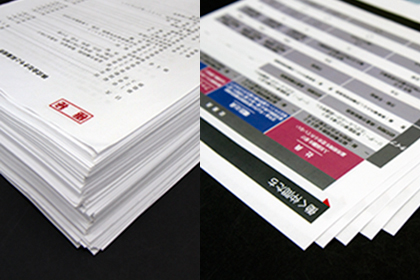
"KIMOTO LINE" - Supporting autonomous action through simplified internal rules
In 2018, we reorganized internal regulations that had over 500 pages into a 5-page rulebook "KIMOTO LINE" using *illustrations and simple text.
By creating rules that are easy for anyone to understand and implement from an employee perspective, we support autonomous and efficient organizational management.
Workflow reform initiatives Here (Column vol.1 to vol.25)
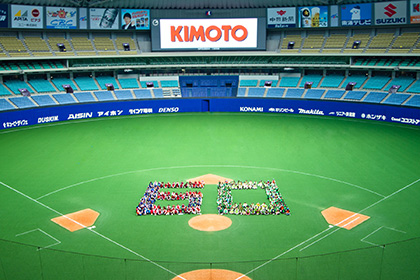
Nagoya Dome Sports Day
In 2012, to commemorate the 60th anniversary, we held a sports day at Nagoya Dome primarily for employees in western Japan. We handled everything from planning to operation ourselves, and employees' families also participated, creating a lively event. Through sports, it became a valuable opportunity for families who rarely meet to interact with each other.
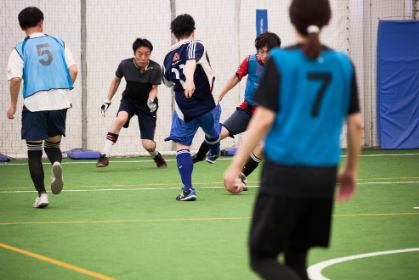
Holding internal and external futsal exchange tournaments
Since we have many remote workers, daily interactions tend to be mainly through phone, email, and chat. Therefore, we hold futsal tournaments as opportunities for employees to meet face-to-face and deepen interactions beyond departmental and location boundaries.
We also participate in futsal tournaments aimed at connecting the entire surveying industry, and we actively interact with other companies. While each team engages in heated matches, the families who come to cheer also join in and enjoy the friendly atmosphere.
Local contribution
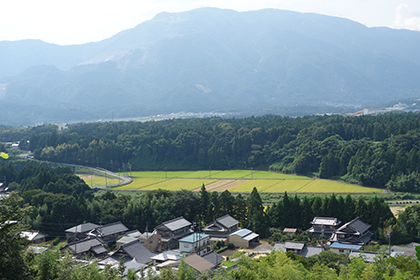
KIMOTO Farm: Initiatives for Solving Local Issues
In 2009, when President Kimoto (current Chairman) visited Mie Prefectural Office and Inabe City, he learned about the reality of regional population decline and strongly felt that "we must curb regional depopulation and achieve sustainable regional contribution." After about two years of detailed research and planning, we launched the KIMOTO Farm project in 2011.
Since then, we have been taking care of farmland without cultivators and engaging in rice farming and dahlia cultivation.
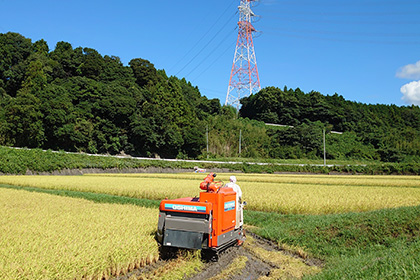
Organically Grown Rice "Harvest Century Rice"
In 2024, we fully transitioned to organic cultivation of "Harvest Century Rice" in accordance with the organic JAS certification standards, implementing consistent organic farming practices from seedling production to harvest. The 2025 crop has obtained organic JAS certification (during the conversion period). Due to constraints in the surrounding environment, certification acquisition remains challenging for some fields, but we will continue to strictly apply the same organic farming methods across all fields, working to minimize environmental impact and ensure food safety.
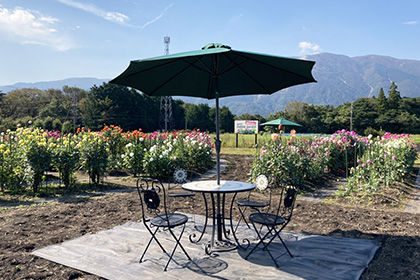
KIMOTO Dahlia Garden
Dahlia cultivation, which began as experimental farming in 2017 as a solution to agricultural challenges such as wildlife damage, has now developed into the "KIMOTO Dahlia Garden" with 77 varieties and 2,300 plants, welcoming many visitors as a local tourism resource. The number of visitors from outside the prefecture is also increasing, contributing to regional economic revitalization.
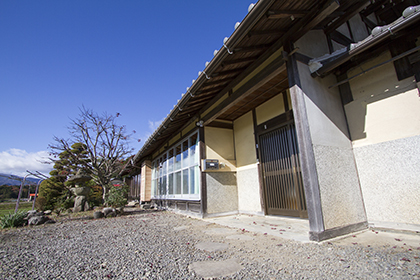
Regional Resource Utilization "KIMOTO House"
As part of our community contribution efforts, we utilize a traditional Japanese house as employee accommodation, simultaneously achieving effective use of regional resources and improving employee welfare.
Through these integrated initiatives, we are building a business model that ensures agricultural sustainability, revitalizes the regional economy, and fulfills corporate social responsibility, aiming for long-term enhancement of corporate value.
KIMOTO Farm official Facebook Here

Youth Baseball Tournament "KIMOTO Cup"
With the hope that children will "develop independence to think and act for themselves, cultivate consideration for others, and build the ability to carve out their future toward their dreams," we have been holding the youth baseball tournament "KIMOTO Cup" annually since 2006.
Over 19 years, the number of participating teams reached 232, and the total number of participants reached 4,300. The final game is held every year at the baseball field located within the KIMOTO Mie Plant premises.
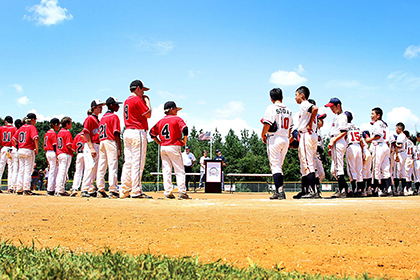
Japan-US Youth Baseball Tournament
In 2014, to commemorate the 10th KIMOTO Cup, we invited children from Inabe City, "All Inabe," to Cedartown, Georgia, where our North American plant is located. We realized a Japan-U.S. goodwill match with an American youth baseball team, fulfilling their dream of playing baseball in the United States, the home of the sport.
It became a memorable tournament where international exchange transcended language, cultural, and distance barriers through baseball.